
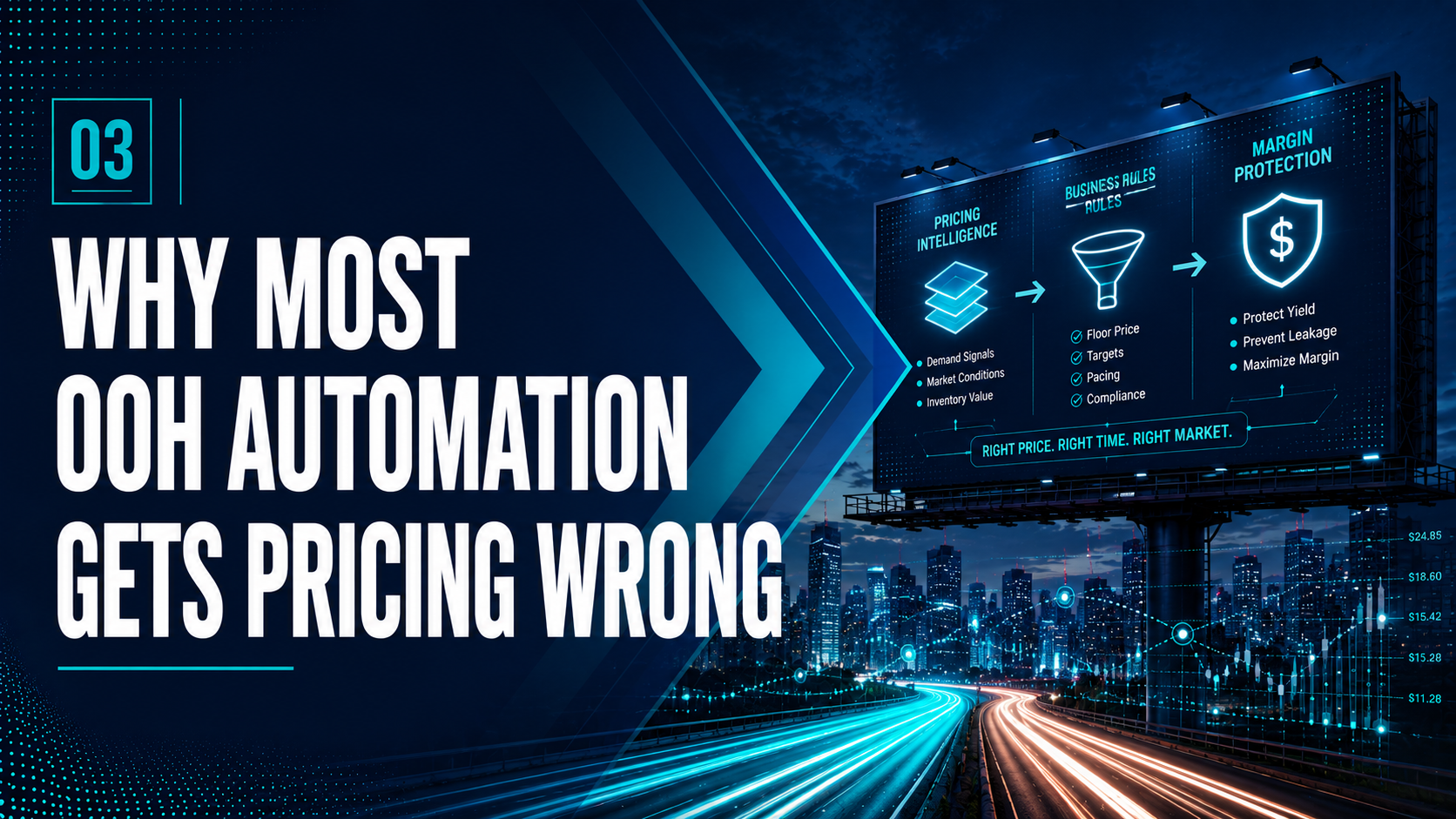
There’s a lot of talk right now about “automation” in out-of-home.
Faster workflows.
Instant availability.
Simpler buying.
On paper, it all sounds great.
But from an operator’s perspective, the real question usually isn’t speed.
It’s this:
Am I losing control of my rates?
Because if automation means pricing gets pushed outside your strategy, it stops feeling like progress and starts feeling like margin erosion.
That’s the real conversation.
And it’s where most OOH automation gets pricing wrong.
Most Automation Starts in the Wrong Place
Most automation models work like this:
- a board is available
- a rate is attached
- a buyer sees it
- a transaction happens
Simple.
Clean.
Easy to scale.
And often completely wrong.
Because OOH pricing is rarely that simple.
A board isn’t just a board.
Its value changes depending on timing, market pressure, contract length, demand, and the business rules that matter to the operator.
When automation ignores that, it stops being helpful.
It starts creating problems.
Price Is Not Tied to the Face
This is the part that matters most:
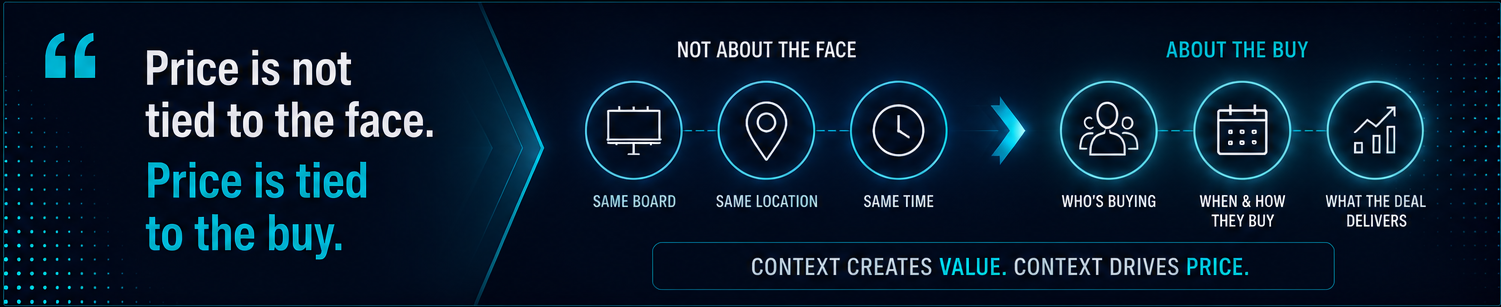
Price is not tied to the face. Price is tied to the buy.
That distinction changes everything.
A deal depends on:
- the location itself
- timing and seasonality
- how long the contract runs
- the type of buyer
- current occupancy
- demand pressure
- strategic market priorities
- the operator’s own pricing philosophy
Two buyers looking at the exact same face should not always receive the exact same rate.
Because they are not buying the same deal.
When automation treats pricing like a static label attached to inventory, value leaks out of the business.
When Automation Ignores That, Rates Compress
This is where operator skepticism comes from.
And frankly, it’s justified.
When pricing becomes too simple:
- premium inventory gets underpriced
- negotiating leverage disappears
- buyers learn to expect flat pricing
- margins quietly erode over time
Automation starts feeling less like efficiency and more like commoditization.
That’s not innovation.
That’s just faster revenue dilution.
And once pricing expectations shift downward, they are incredibly difficult to rebuild.
Yield Management Is the Protection Layer
This is why Yield Management matters.
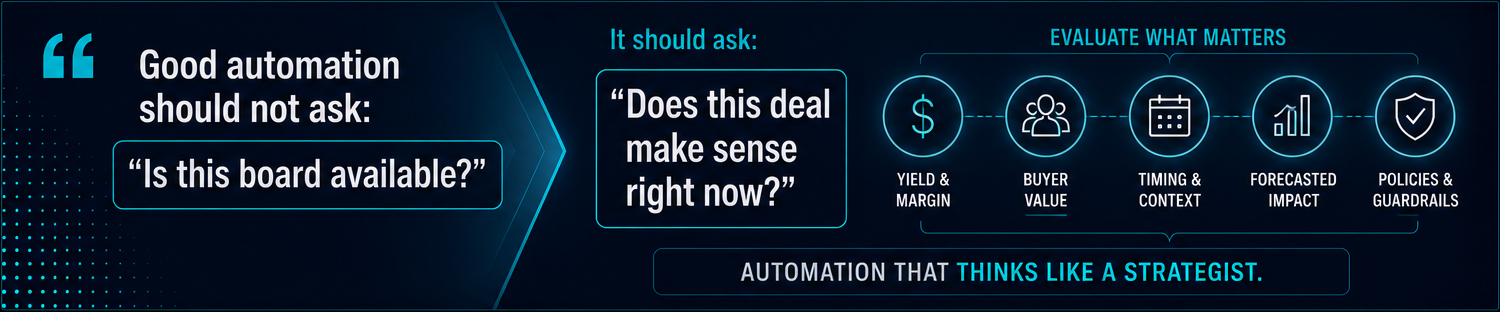
Good automation should not ask:
“Is this board available?”
It should ask:
“Does this deal make sense right now?”
That requires more than inventory visibility.
It requires pricing logic.
Yield Management allows pricing to respond to:
- occupancy levels
- contract structure
- buyer type
- seasonality
- scarcity
- operator-defined rules and thresholds
That means automation becomes selective, not blunt.
It protects the value of the inventory instead of flattening it.
Without yield, automation is just static pricing at scale.
With yield, automation becomes strategic.
The Competitive Reality for Independents
This matters even more for independent operators.
Large players like Lamar, Outfront, and CCO are already investing heavily in automated buying systems.
They have the scale and resources to shape how agencies buy.
That creates a real strategic question:
Can independents only compete by staying niche?
Or—
Can they compete by becoming just as easy to buy, without sacrificing pricing control?
Because if agencies continue shifting toward automated buying—and independents are not part of those workflows—they risk getting pushed farther and farther out of the pipeline.
Not because their inventory is worse.
Because they are harder to transact with.
That’s a dangerous place to be.
Competing Without Becoming Commoditized
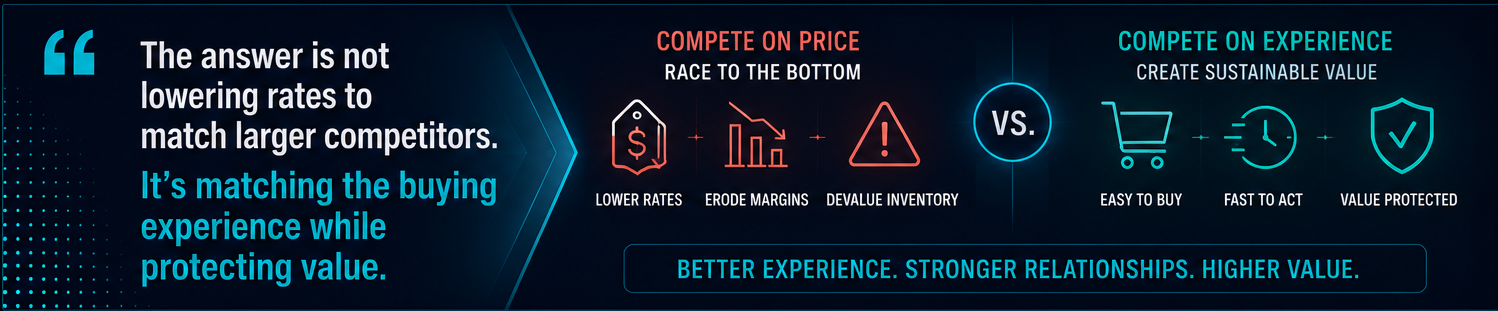
The answer is not lowering rates to match larger competitors.
It’s matching the buying experience while protecting value.
That means:
- automation with rules
- visibility with control
- participation without commoditization
Independents do not need to become marketplaces.
They need infrastructure that allows them to compete inside modern buying behavior.
They need automation that works for operators—not just buyers.
The Future of National Buying
The operators who win national demand won’t simply have great inventory.
They’ll be:
- the easiest to work with
- the fastest to respond
- the simplest to buy from
- the least burdensome to place with
That’s not really a technology story.
It’s a sales story.
Because the future of national buying belongs to the operators who understand that making buying easier is one of the strongest forms of value creation.
What Good Automation Actually Looks Like
Good automation looks like this:
- buyers can evaluate inventory faster
- pricing reflects real business logic instantly
- operators define the rules
- approvals happen where they should
- speed increases without margin loss
That’s the difference between automation that serves buyers and automation that serves operators.
And that difference matters.
Because one protects long-term revenue.
The other slowly gives it away.
The Industry Is Moving Either Way
Agencies are increasingly moving toward:
- platform-driven buying
- centralized planning tools
- AI-assisted workflows
- fewer manual steps
This shift is already happening.
The question is not whether automation will exist.
It’s whether operators will control how it works.
That’s the real decision.
Not whether to participate.
But whether to participate on your terms.
Operators Don’t Want Less Control
They want smarter control.
They want:
- faster execution
- stronger pricing protection
- better access to national demand
- scalable participation without sacrificing margin
Automation that delivers that is worth paying attention to.
Automation that doesn’t is just another way to lose value.
Because operators don’t want less control.
They want the right kind of control—at scale.