
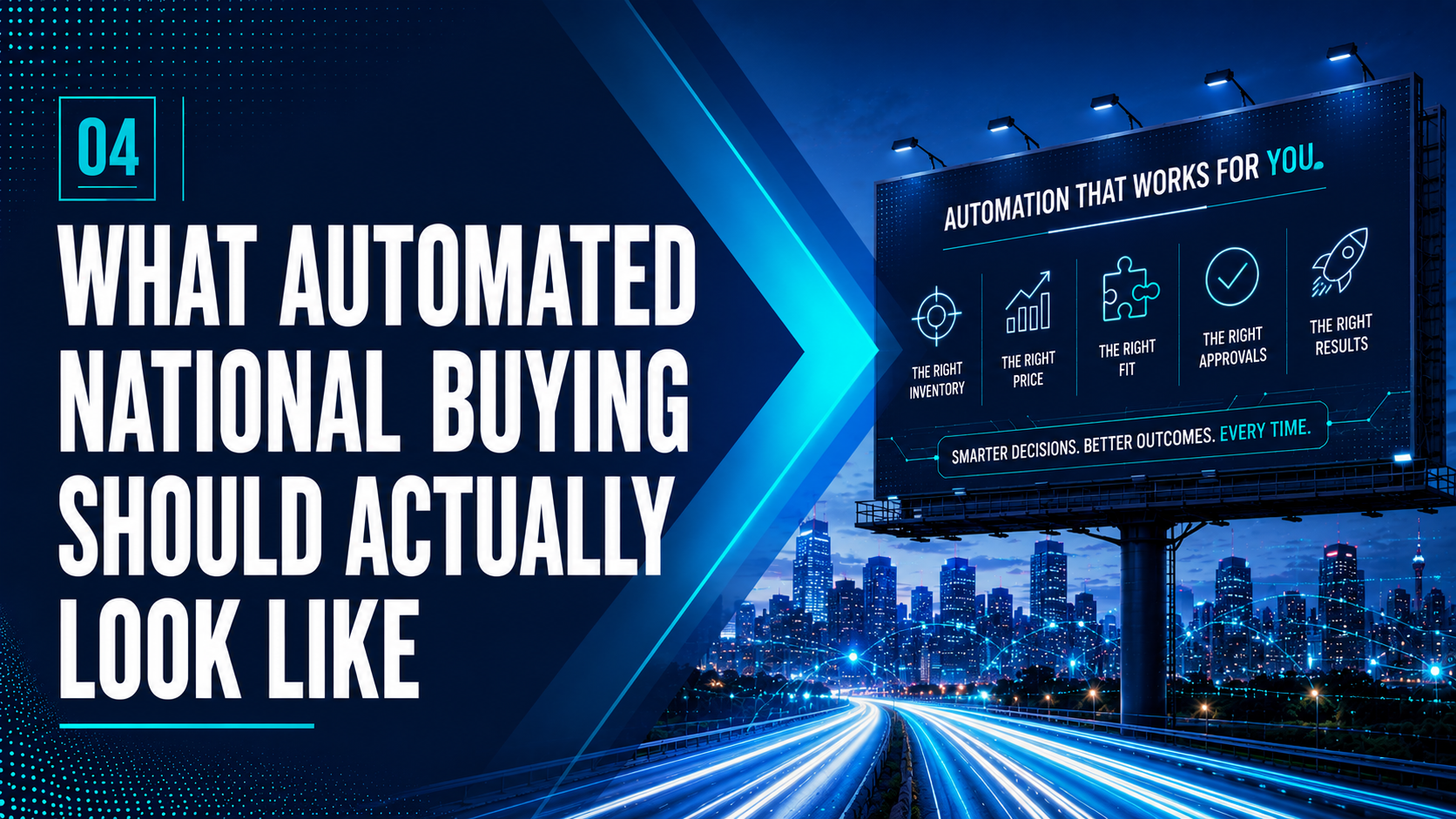
Say “automated buying” in OOH and most operators immediately think the same thing:
Programmatic.
Loss of control.
Pricing pressure.
A race to the bottom.
That reaction makes sense.
A lot of automation in this industry has trained operators to associate speed with margin loss.
If automation means someone else controls pricing, buyers become invisible, and inventory turns into a commodity, then of course operators are skeptical.
They should be.
But that’s not what good automation should look like.
The problem is that we’ve started treating all automation like it’s the same thing.
It isn’t.
And if OOH wants to move forward, we need to be much more precise about the difference.
Automated Buying Is Not the Same as Programmatic
This is the first distinction that matters.
Programmatic is built around:
- digital inventory
- impression-based buying
- auction logic
- SSP architecture
- rapid, often opaque transactions
That works well for certain types of digital media.
But national contracted OOH buys are fundamentally different.
They require:
- guaranteed placement
- real contract structure
- visibility into the buyer
- operator approvals
- inventory protection
- pricing based on actual business strategy
This is not about selling impressions.
It is about placing real campaigns on real inventory with real revenue implications.
That requires a different kind of automation.
Not blind bidding.
Not static rates.
Not another marketplace sitting in the middle.
The Goal Isn’t Faster Buying
This is where the conversation usually gets too shallow.
People talk about automation like the goal is simply speed.
Faster approvals.
Faster placement.
Faster transactions.
Speed matters.
But speed by itself is not the goal.
The real goal is:
- removing unnecessary friction
- improving decision quality
- making the right deals easier to complete
Bad automation asks:
“How fast can we transact?”
Good automation asks:
“How confidently can we move the right deal forward?”
That’s a very different system.
And it produces very different outcomes.
What Good Automated Buying Should Include
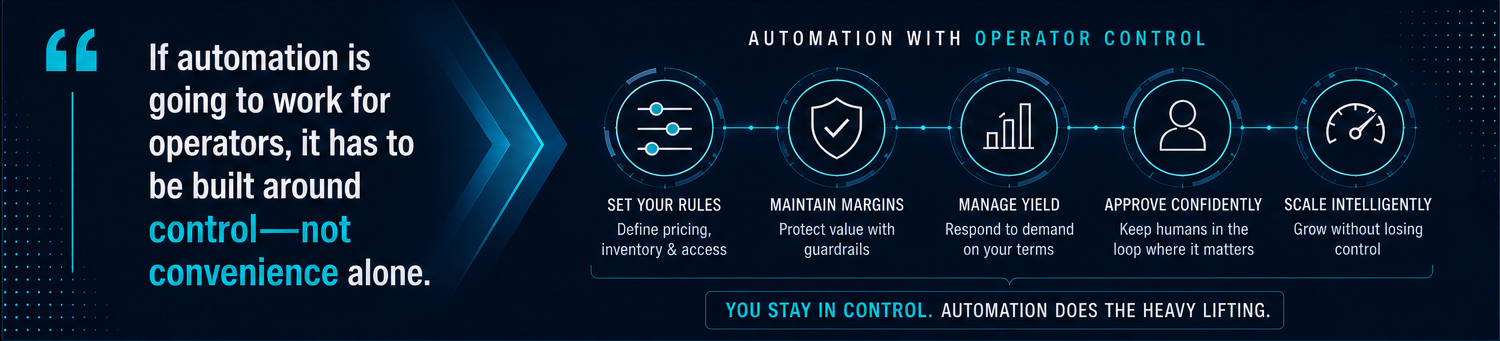
If automation is going to work for operators, it has to be built around control—not convenience alone.
That starts with real-time availability.
Buyers should be evaluating what is actually available, not outdated spreadsheets or static inventory lists.
It also requires yield-based pricing.
Price should reflect the conditions of the full buy—not a flat number attached to a face.
Timing matters.
Occupancy matters.
Contract structure matters.
Buyer type matters.
Operator priorities matter.
Good automation should reflect all of that.
Operators should also define the rules.
They should control:
- floors and thresholds
- approvals and exceptions
- which inventory participates
- what gets automated and what requires review
This is not “set it and forget it.”
It is controlled automation.
And finally, these should remain contract-based transactions.
Not blind impression buys.
Not invisible buyers.
Operators should know who is buying, what they are buying, and under what terms.
That transparency matters.
Inventory Should Stay With the Operator
This is one of the biggest trust issues in the market.
Good automation should not require operators to:
- move inventory into a separate marketplace
- give pricing control to a third party
- rely on someone else’s pricing logic
Inventory should stay where it belongs—in the operator’s system.
Automation should connect buyers to operators.
Not operators to another middle layer.
That distinction matters because trust matters.
And operators should not have to surrender control just to participate in modern buying workflows.

Why This Matters for Independents
Large operators are already moving in this direction.
They are building systems that make inventory easier to discover, evaluate, and transact.
That changes buyer expectations.
Agencies begin to expect:
- faster workflows
- fewer RFPs
- more connected planning systems
- cleaner paths to execution
Independent operators need to be part of that evolution.
But they cannot afford to do it by becoming commoditized.
They need:
- equal visibility
- equal speed
- equal participation in national buying workflows
without giving away pricing power.
That’s why the structure matters.
Not all automation is created equal.
The Best Automation Makes Sales Teams Better
Another common misconception:
Automation replaces salespeople.
It shouldn’t.
Good automation removes the repetitive administrative work so sales teams can spend more time where they create the most value:
- strategy
- packaging
- relationships
- solving bigger client problems
It doesn’t replace local sales teams.
It doesn’t replace national reps.
It doesn’t replace broker relationships.
It makes all of them stronger by reducing friction around the deal.
That’s what good infrastructure should do.
What the Future Should Feel Like
A buyer should be able to:
- evaluate inventory quickly
- understand pricing clearly
- place holds efficiently
- move into contracts faster
An operator should be able to:
- protect pricing
- control visibility
- approve where needed
- participate without losing leverage
That is what modern buying should feel like.
Not chaos.
Not commoditization.
Not blind automation.
Just better workflows built around how OOH actually sells.
OOH Shouldn’t Automate Like Display Ads
This is the part the industry has to get right.
OOH does not sell like display ads.
It should not automate like display ads either.
The future is not blind bidding.
It is transparent, yield-driven, contract-based automation that respects how operators actually run their business.
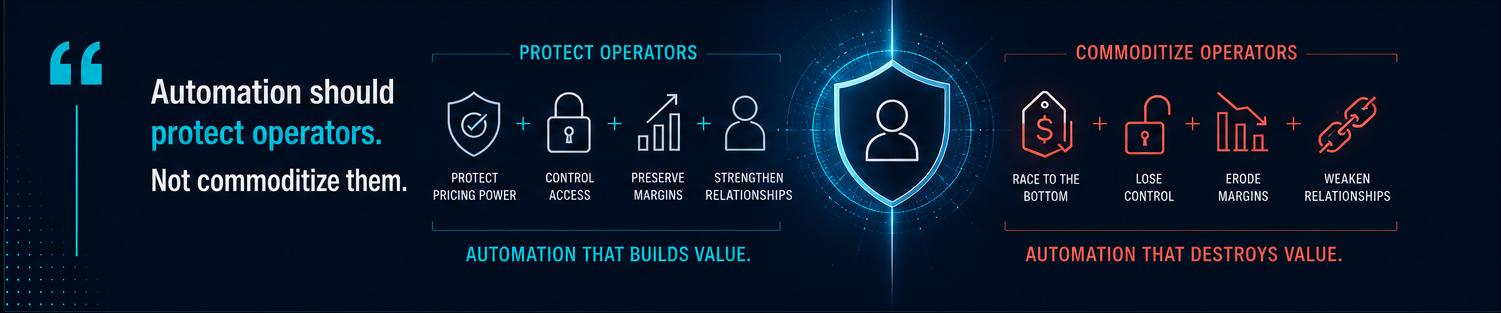
Automation should protect operators.
Not commoditize them.
That’s what automated national buying should actually look like.